

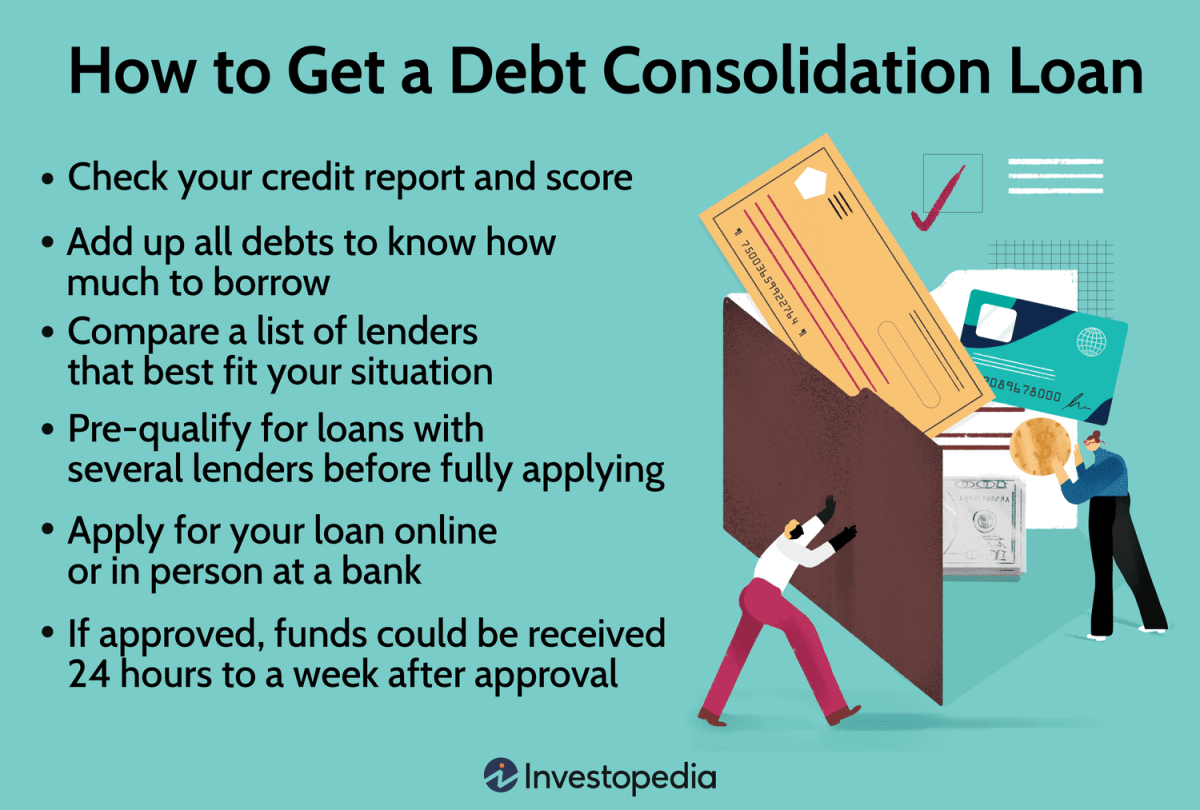
Is a personal loan a good idea for debt consolidation? It depends entirely on whether you are solving a math problem or a behavior problem. If your interest rates on various credit cards are hovering in the high twenties while a personal loan offers a single, lower rate, the math works. If you are simply moving the debt from one bucket to another without changing how you spend, you are just rearranging the furniture in a burning building.
The direct answer is yes, provided the interest rate on the new loan is lower than the weighted average of your current debts. Most people look at a single monthly payment and feel a sense of relief, but that relief is often psychological rather than financial. We need to look at the total cost of borrowing over the life of the loan to see the truth.
If you owe $30,000 across three cards at 24% APR, and you take out a $30,000 loan at 12% APR, you win. You win because the velocity of your repayment increases. But if the new loan has a longer term, you might end up paying more in total interest even with a lower rate. It is a common trap.
We have seen this play out many times. People feel lighter because they have one bill instead of five. But the debt is still there. It has just changed its clothes.
Decoding the Interest Rate Arbitrage
To understand if this move works, you have to understand the concept of arbitrage. In simple terms, you are looking to exploit the difference between what you currently pay and what you could pay. Most credit card debt is revolving, meaning the interest compounds daily or monthly on a growing balance. A personal loan is installment debt, which is much more predictable.
When looking for best debt consolidation loans in August 2026, you must look past the monthly payment. The monthly payment is a marketing tool. It is designed to look affordable. The real number is the APR and the term length. A $50,000 loan with a 5-year term might have a low monthly payment, but the interest accumulation over sixty months can be staggering.
Let’s look at a hypothetical scenario for a $50,000 consolidation loan. If you secure a rate of 10% with a 5-year term, your monthly payment sits somewhere around $1,060. If you stretch that to 7 years to make the payment smaller, you might drop to $830, but you will pay thousands more in interest over that extra two years. It is a trade-off between monthly cash flow and total cost.
It is a slippery slope. You must decide if you can actually afford the original payments or if you are just looking for a way to breathe for a few months. (Most people choose the latter). If you choose the latter, you are playing a dangerous game with your future self.
The math is cold and unforgiving. It does not care about your stress levels. It only cares about the percentage points and the timeline.
| Loan Amount | Interest Rate (APR) | Term (Months) | Monthly Payment | Total Interest Paid |
|---|---|---|---|---|
| $30,000 | 24% (Credit Card) | 60 | $860 | $21,600 |
| $30,000 | 11% (Personal Loan) | 60 | $663 | $9,780 |
Comparing Loan Products and Relief Programs
Not all consolidation methods are created equal. You have several paths, and some are much more aggressive than others. You might look into credit card debt consolidation loans which are specifically designed to wipe out high-interest revolving balances. These are often the cleanest way to handle the situation if your credit score is still intact.
Then there are the specialized lenders like OneMain Financial, which offers personal loans specifically for debt consolidation. These are often geared toward people who might not qualify for the “prime” rates at a big bank. You trade a slightly higher interest rate for a higher likelihood of approval. It is a middle ground between traditional banking and high-interest predatory lending.
If your debt is overwhelming, you might move away from loans and toward debt relief. This is a different beast entirely. Organizations like best debt consolidation programs often involve a structured plan where you pay a portion of what you owe, and the company negotiates with creditors. This can impact your credit score significantly, which is a vital distinction to make before you sign anything.
There is a hierarchy of severity here. You start with a loan to lower the rate. If that fails, you look at management plans. If that fails, you look at settlement. Each step down the ladder carries more risk to your credit, but offers more relief to your monthly budget. You need to know exactly where you stand on that ladder before you take the first step.
It is not a single path. It is a series of choices with varying levels of consequences.
- Unsecured Personal Loans: Best for those with good to fair credit looking to lower APR.
- Credit Card Consolidation: Specific to revolving debt; often requires high credit scores.
- Debt Management Plans (DMP): Often through non-profit agencies; helps lower interest without new loans.
- Debt Settlement: The last resort; involves negotiating for less than you owe, often damaging credit.
If you want to explore options like Jetzloan, you should compare their terms against a traditional bank’s offer. Do not assume the first offer you see is the best one. It rarely is.
The Reality of the $30,000 Debt Hurdle
A common question is how to pay off $30,000 in debt in one year. Unless you have a massive windfall coming, the math is brutal. If you want to clear $30,000 in 12 months, you are looking at roughly $2,500 a month, plus interest. For most people, that is a fantasy. It is a goal that requires a radical lifestyle shift, not just a better loan.
When people ask “who has the best personal loans,” they are usually looking for a magic wand. There is no magic. There are only interest rates and terms. The “best” loan is the one that has the lowest total cost of borrowing, which is almost always the one with the shortest term and the lowest APR.
We often see people try to “tackle” debt by cutting expenses, but they fail to account for the interest growth. If you are paying $500 a month toward a $30,000 balance at 22%, you are barely touching the principal. You are basically just paying the bank for the privilege of being in debt. It is a treadmill that never stops.
To actually move the needle, you need a two-pronged approach. You need a lower interest rate to stop the bleeding, and you need an aggressive repayment schedule to actually kill the principal. If you only fix the rate and keep paying the same monthly amount, you are just slowing down the inevitable. You have to increase the speed of your payments.
Hard truths are necessary here. You cannot outrun math with a better budget alone.
Evaluating Non-Profit vs. For-Profit Options
There is a significant distinction between a for-profit debt consolidation company and a non-profit credit counseling agency. A for-profit company might offer to consolidate your debt, but they often charge high fees or even take a cut of your settlement. They are a business, and their primary goal is to make a profit from your struggle.
Non-profit agencies, like those offered through Consolidated Credit, generally operate under different guidelines. They focus on Debt Management Plans (DMPs). In a DMP, they work with your creditors to lower your interest rates, and you make one monthly payment to the agency, which then distributes it to your creditors. This is generally much better for your credit than settlement, but it requires discipline.
You must be wary of companies that promise to “wipe away” your debt for a small fee. These are often predatory. They want you to stop paying your creditors entirely so they can negotiate a settlement. This ruins your credit score for years and can lead to lawsuits from your creditors. It is a scorched-earth policy. Use it only if you are truly drowning.
The choice between a loan, a DMP, or settlement depends on your credit score and your income. If your score is still decent, a personal loan is almost always the superior option. It is clean, it is simple, and it doesn’t require you to stop paying your bills. If your score is already in the basement, you might not even qualify for a loan, leaving you with the more aggressive relief options.
Assess your credit score before you call anyone. It is your most valuable piece of data.